Buy agentur24.eu ?
We are moving the project
agentur24.eu .
Are you interested in purchasing the domain
agentur24.eu ?
domain@kv-gmbh.de · 0541-91531010
Buy agentur24.eu ?
What is a temporal clause?
A temporal clause is a type of subordinate clause that provides information about when an action takes place in relation to the main clause. It usually includes a time-related word or phrase, such as "when," "while," "after," "before," or "since." Temporal clauses help to clarify the timing of events in a sentence and are commonly used in complex sentences to show the sequence of actions. **
What is the temporal context?
The temporal context refers to the time period or timeframe in which an event, situation, or piece of information occurs or is relevant. It helps to provide a framework for understanding the sequence of events and the historical or current significance of a particular topic. Understanding the temporal context is important for interpreting and analyzing information accurately within its historical or current timeframe. **

Similar search terms for Temporal
Top-Angebote
Products related to Temporal:
-
Various Publishers 22 Immutable Laws Branding, Marketing & Positioning 3 Book Set by Al Ries, Jack Trout & Laura Ries - Paperback Business Strategy ClassicsThis three-book paperback set brings together three influential marketing texts written by Al Ries alongside collaborators Jack Trout and Laura Ries. The collection distils decades of branding and marketing strategy into short, memorable 'laws' and case studies. The set includes The 22 Immutable Laws of Branding, The 22 Immutable Laws of Marketing, and Positioning: The Battle for Your Mind. Ideal for business students, entrepreneurs, marketers, and anyone building a brand, it's a practical, portable reference library that has shaped how the modern business world thinks about positioning, branding, and market leadership.28,99 £*Shipping: 2,99 £Secure redirect to the provider
-
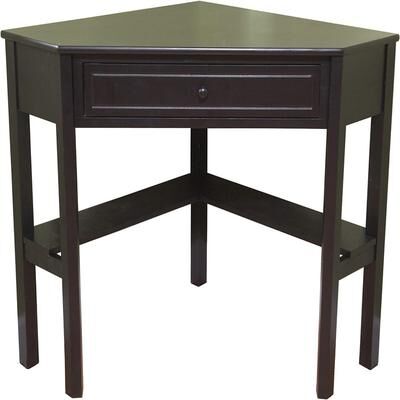
No Marketing Systems Wood Corner Desk"The corner desk measures 42"" X 28"" X 30"" And Weighs 42 lbs. Arrives with only minimal Assembly required. Comfortably fitting in any home, studio, apartment, and office, The small corner writing desk maximizes space in compact rooms."258,89 $*Shipping: 0,00 $Secure redirect to the provider



-
What does the term "temporal error" mean?
Temporal error refers to a mistake or discrepancy that occurs in relation to time. It can occur when there is a mismatch between the timing of events or actions, leading to inaccuracies or inconsistencies in the temporal sequence. In computing, temporal errors can occur when there are issues with the timing or synchronization of processes, resulting in incorrect outcomes or behaviors. Identifying and addressing temporal errors is important to ensure the accuracy and reliability of systems and processes. **
-
How are temporal clauses formed in Latin?
Temporal clauses in Latin are formed using subordinating conjunctions such as "cum" (when), "postquam" (after), "dum" (while), and "antequam" (before). These conjunctions are followed by a verb in the subjunctive mood to indicate that the action of the temporal clause is dependent on the action of the main clause. For example, "cum veniat" means "when he/she comes" and "postquam viderit" means "after he/she sees." These temporal clauses are used to express the time relationship between two actions or events. **
-
How do you form temporal clauses in French?
Temporal clauses in French are formed using subordinating conjunctions such as "quand" (when), "pendant que" (while), "dès que" (as soon as), "avant que" (before), "après que" (after), etc. These subordinating conjunctions are followed by a subject and a verb in the subjunctive mood if the action in the temporal clause has not yet occurred, or in the indicative mood if the action has already taken place. Temporal clauses are used to indicate the timing or sequence of events in relation to the main clause. **
-
Is there actually a temporal version of homesickness?
Yes, there is a temporal version of homesickness known as "time-sickness." Time-sickness is the feeling of longing for a specific time period in the past, such as childhood or a significant moment in one's life. It can be triggered by nostalgia or a desire to relive happy memories from the past. Time-sickness can lead to feelings of sadness, yearning, and a sense of disconnection from the present moment. **


Can there be simultaneous spatial and temporal summation?
Yes, simultaneous spatial and temporal summation can occur. Spatial summation refers to the combination of signals from different locations on a neuron's dendrites, while temporal summation involves the combination of signals arriving at different times. Both types of summation can occur simultaneously, with multiple signals from different locations and at different times converging to trigger an action potential in a neuron. This allows for the integration of spatially and temporally distributed inputs to generate a coordinated response. **
What are the temporal prepositions for "in" and "nach"?
The temporal preposition for "in" is typically used for future time expressions, such as "in einer Woche" (in a week) or "in zwei Monaten" (in two months). On the other hand, the temporal preposition for "nach" is used for time expressions that refer to events happening after a certain point in time, such as "nach dem Abendessen" (after dinner) or "nach der Schule" (after school). **
Top-Angebote
Products related to Temporal:
-
Uplifted Finds Retro Macintosh Aesthetic Clock & Technical Temporal Desktop Logic Retro Macintosh Aesthetic Clock & Technical Temporal Desktop LogicInaugurate a powerful ChronosSanctuary energy for your digital environment with the ultimate 2026 boutiqueintegrated temporal solution. The Retro Macintosh Aesthetic Clock is the premier choice for creating a TechnicalModern or StudioLuxe atmosphere...212,97 $*Shipping: 0,00 $Secure redirect to the provider
-
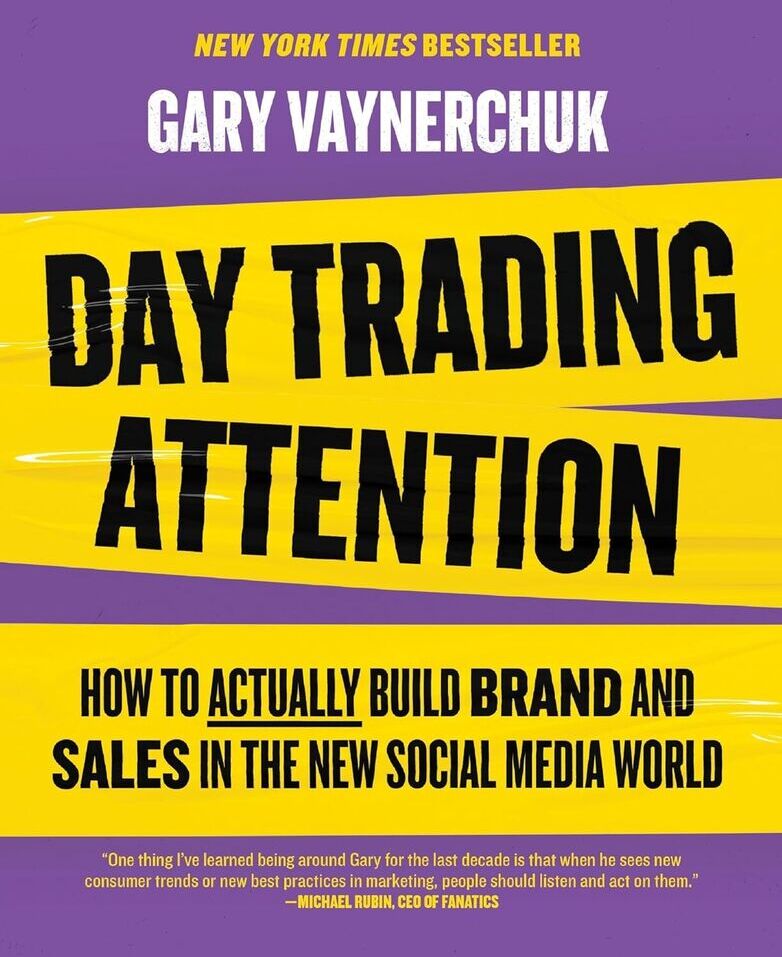
Harper Business Day Trading Attention & Jab Jab Jab Right Hook by Gary Vaynerchuk - Hardcover 2 Book Marketing Set - Business Strategy & Social Media AdvertisingThis two-book bundle brings together Gary Vaynerchuk's most influential marketing titles in one brand-new hardcover set. Day Trading Attention (2024) updates the playbook for today's social platforms, while Jab, Jab, Jab, Right Hook (2013) remains the foundational storytelling guide that built GaryVee's reputation. Together they offer a before-and-after view of how attention, content, and advertising have evolved — essential reading for marketers, founders, and content creators. The books are published by Harper Business and are suitable for adult readers interested in business and marketing.3,89 £*Shipping: 2,99 £Secure redirect to the provider
-
Various Publishers 22 Immutable Laws Branding, Marketing & Positioning 3 Book Set by Al Ries, Jack Trout & Laura Ries - Paperback Business Strategy ClassicsThis three-book paperback set brings together three influential marketing texts written by Al Ries alongside collaborators Jack Trout and Laura Ries. The collection distils decades of branding and marketing strategy into short, memorable 'laws' and case studies. The set includes The 22 Immutable Laws of Branding, The 22 Immutable Laws of Marketing, and Positioning: The Battle for Your Mind. Ideal for business students, entrepreneurs, marketers, and anyone building a brand, it's a practical, portable reference library that has shaped how the modern business world thinks about positioning, branding, and market leadership.28,99 £*Shipping: 2,99 £Secure redirect to the provider
-
What is a temporal clause?
A temporal clause is a type of subordinate clause that provides information about when an action takes place in relation to the main clause. It usually includes a time-related word or phrase, such as "when," "while," "after," "before," or "since." Temporal clauses help to clarify the timing of events in a sentence and are commonly used in complex sentences to show the sequence of actions. **
-
What is the temporal context?
The temporal context refers to the time period or timeframe in which an event, situation, or piece of information occurs or is relevant. It helps to provide a framework for understanding the sequence of events and the historical or current significance of a particular topic. Understanding the temporal context is important for interpreting and analyzing information accurately within its historical or current timeframe. **
-
What does the term "temporal error" mean?
Temporal error refers to a mistake or discrepancy that occurs in relation to time. It can occur when there is a mismatch between the timing of events or actions, leading to inaccuracies or inconsistencies in the temporal sequence. In computing, temporal errors can occur when there are issues with the timing or synchronization of processes, resulting in incorrect outcomes or behaviors. Identifying and addressing temporal errors is important to ensure the accuracy and reliability of systems and processes. **
-
How are temporal clauses formed in Latin?
Temporal clauses in Latin are formed using subordinating conjunctions such as "cum" (when), "postquam" (after), "dum" (while), and "antequam" (before). These conjunctions are followed by a verb in the subjunctive mood to indicate that the action of the temporal clause is dependent on the action of the main clause. For example, "cum veniat" means "when he/she comes" and "postquam viderit" means "after he/she sees." These temporal clauses are used to express the time relationship between two actions or events. **
Similar search terms for Temporal
-
No Marketing Systems Wood Corner Desk"The corner desk measures 42"" X 28"" X 30"" And Weighs 42 lbs. Arrives with only minimal Assembly required. Comfortably fitting in any home, studio, apartment, and office, The small corner writing desk maximizes space in compact rooms."258,89 $*Shipping: 0,00 $Secure redirect to the provider
-
Flythe Consulting Arika Wall Sconce Pair, Pair, Satin NickelThe Arika Wall Sconce Pair is an adaptation of old-fashioned light fixtures, with an appealing design that will complement modern decor. The lacquered solid brass sconces have 4.75 dia.x7 H clear glass hurricanes that will protect your standard...179,00 $*Shipping: 22,95 $Secure redirect to the provider
-
Flythe Consulting Manor Wall Sconce Pair, Pair, Satin NickelHandcrafted of solid brass, the Manor Wall Sconce Pair features a curved arm design and a lacquered hand-finish. Each 4.75 dia.x7 H glass hurricane protects your taper from drafts. Each decorative wall sconce is 4.5 Wx7 Dx15 H. This item is our...169,00 $*Shipping: 22,95 $Secure redirect to the provider
-
How do you form temporal clauses in French?
Temporal clauses in French are formed using subordinating conjunctions such as "quand" (when), "pendant que" (while), "dès que" (as soon as), "avant que" (before), "après que" (after), etc. These subordinating conjunctions are followed by a subject and a verb in the subjunctive mood if the action in the temporal clause has not yet occurred, or in the indicative mood if the action has already taken place. Temporal clauses are used to indicate the timing or sequence of events in relation to the main clause. **
-
Is there actually a temporal version of homesickness?
Yes, there is a temporal version of homesickness known as "time-sickness." Time-sickness is the feeling of longing for a specific time period in the past, such as childhood or a significant moment in one's life. It can be triggered by nostalgia or a desire to relive happy memories from the past. Time-sickness can lead to feelings of sadness, yearning, and a sense of disconnection from the present moment. **
-
Can there be simultaneous spatial and temporal summation?
Yes, simultaneous spatial and temporal summation can occur. Spatial summation refers to the combination of signals from different locations on a neuron's dendrites, while temporal summation involves the combination of signals arriving at different times. Both types of summation can occur simultaneously, with multiple signals from different locations and at different times converging to trigger an action potential in a neuron. This allows for the integration of spatially and temporally distributed inputs to generate a coordinated response. **
-
What are the temporal prepositions for "in" and "nach"?
The temporal preposition for "in" is typically used for future time expressions, such as "in einer Woche" (in a week) or "in zwei Monaten" (in two months). On the other hand, the temporal preposition for "nach" is used for time expressions that refer to events happening after a certain point in time, such as "nach dem Abendessen" (after dinner) or "nach der Schule" (after school). **
* All prices are inclusive of VAT and, if applicable, plus shipping costs. The offer information is based on the details provided by the respective shop and is updated through automated processes. Real-time updates do not occur, so deviations can occur in individual cases. ** Note: Parts of this content were created by AI.